
This article explains when planning permission is required for solar panels on commercial properties in Manchester, covering permitted development rights, conservation areas, listed buildings, and the difference between prior approval and full planning permission.
Local Guides2026
Do You Need Planning Permission for Solar Panels on a Commercial Property in the UK?
Most rooftop systems under 1 MW are permitted development. Exceptions and rules explained.
Most Commercial Solar Installations Fall Under Permitted Development Rights
Most commercial rooftop jobs in England avoid a full application under Part 14 — provided they meet projection, height and visual-impact conditions.
200mm Projection Limit
Panels must not project more than 200mm from the roof surface or wall surface.
Height Limit
Panels must not sit higher than the highest part of the roof, excluding the chimney.
Removable & Low Impact
Equipment must be removed when no longer needed and minimise visual impact.
Good news first. Most commercial solar panel jobs here in England avoid a full planning application. We call it ‘permitted development rights’, basically, rules that let you tweak your property without all the usual planning hassle.
The Town and Country Planning (General Permitted Development) Order 2015 lays out these rights. For commercial buildings, check Part 14. (It used to be Part 40, by the way.) This covers rooftop solar panels and sometimes, ground-mounted arrays.
What the Rules Actually Say
Commercial solar panel permitted development rights have conditions. You can’t just slap panels up. Don’t assume you’re covered. The main things you need to do are pretty simple:
- Panels must not project more than 200mm from the roof surface or wall surface
- Panels must not sit higher than the highest part of the roof (excluding the chimney)
- Equipment must be removed when no longer needed for energy generation
- The installation must minimise its visual impact on the building and surrounding area
If your project ticks those boxes, you’re probably okay. But there’s a hang-up we see all the time.
Not every building gets permitted development rights.
Listed buildings, scheduled monuments, and conservation areas follow tougher rules. Manchester has places like Castlefield and Ancoats as conservation areas, for instance. Your commercial property inside one of these zones? You’ll nearly always need a planning application. We’ve seen it near Deansgate, owners thought they were clear, then found their building just scraped into a conservation boundary.
Rooftop vs Ground-Mounted Systems
The kind of system you put in matters a lot. Rooftop commercial solar jobs usually sail through permitted development. Ground mounted arrays? They’re harder. For non-domestic places, standalone solar is fine sometimes, but the rules for its size and where it sits are stricter.
Ground-mounted panels on commercial land must stay under 9 square metres. And you only get one standalone installation per property. So, a big warehouse in Trafford Park with loads of space? A big ground array there will probably need a full planning application.
People often don’t realise this until they’re deep into project plans. We always check permitted development first.
Prior Notification vs Full Planning
Some businesses hit a middle ground. Certain solar jobs need ‘prior notification’ to the local planning authority. This isn’t a full planning application. It’s an easier process, you just tell Manchester City Council your plans. They get 56 days to reply.
Prior notification usually applies to bigger commercial solar systems or ones on industrial buildings. The council just looks at location, design, and how it all looks. If they don’t reply in 56 days, you’re good to go.
We’ve seen this process go smoothly for factories and distribution centres all over east Manchester.
The main point is simple. Most commercial rooftop solar jobs here in Manchester won’t need planning permission. But ‘most’ isn’t ‘all’, right? Getting a pro to look early saves you time, cash, and the real pain of retrospective applications. Thinking about commercial solar panels? Our crew confirms your permitted development status, well before you sign anything.
Permitted Development vs Prior Approval vs Full Planning, Understanding the Difference
Three routes, three timelines. Choose wrong and you waste weeks — or risk an enforcement notice.
0 Days
Permitted Development — no formal application if conditions met
56 Days
Prior Approval — council checks appearance and glare
8–13 Weeks
Full Planning — detailed plans for listed and large ground arrays
| Factor | Permitted Development | Prior Approval | Full Planning |
|---|---|---|---|
| When it applies | Standard rooftops, ≤200mm projection, below ridge | Conservation areas, visible wall-mount, threshold ground arrays | Listed buildings, monuments, >9 sqm ground arrays |
| Application | None — meet Part 14 conditions | Notify Manchester City Council | Detailed plans + heritage reports if needed |
| Decision time | Immediate if compliant | 56 days | 8 to 13 weeks |
| Risk if skipped | Unauthorised if one condition missed | Enforcement for proceeding without notice | Costly retrospective application |
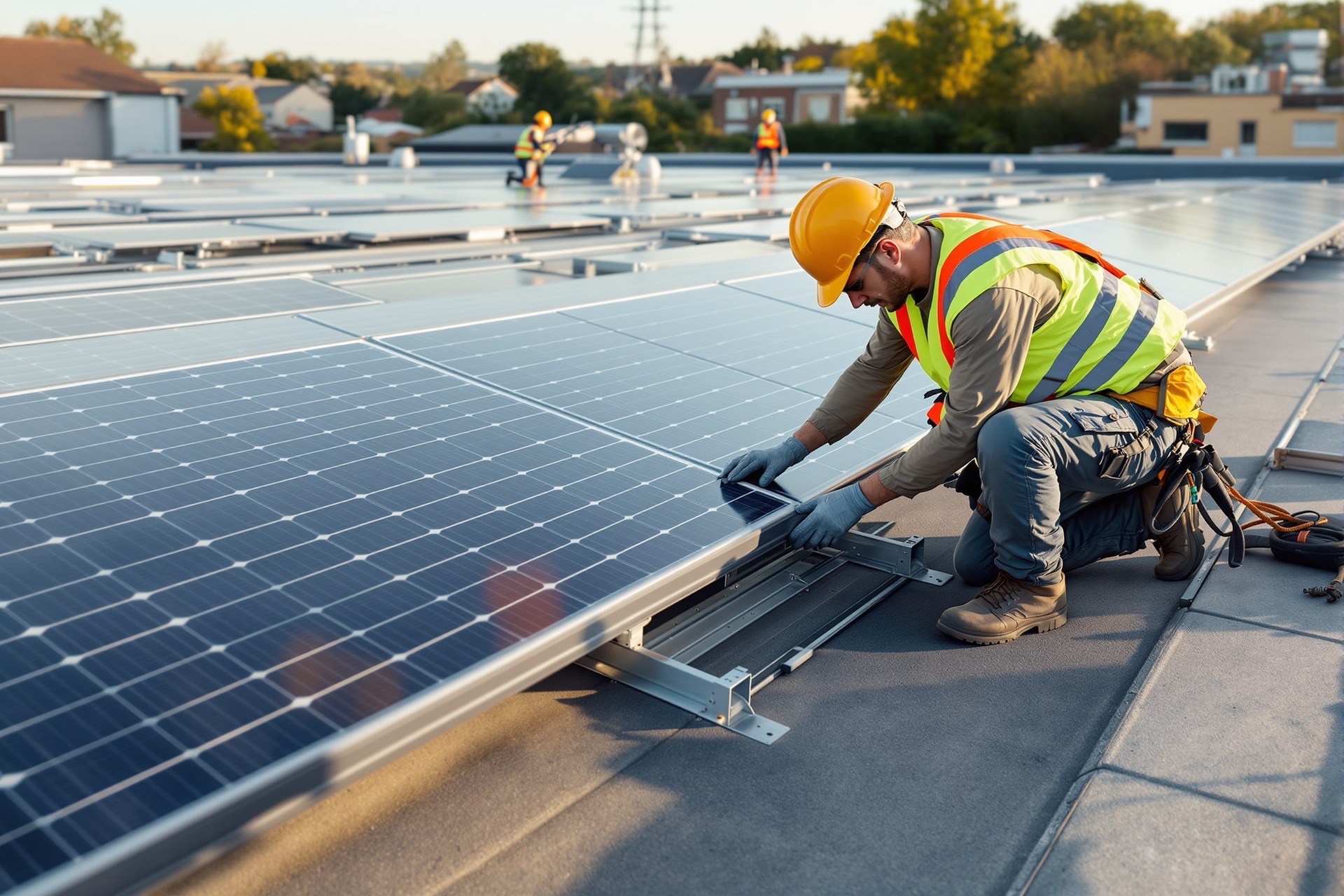
There are three ways to get solar panels on your commercial building. They sound alike, but they’re not. Choose wrong, you waste weeks. You could even get an enforcement notice.
Permitted Development Rights
This is the quick route. Under Part 14 of the General Permitted Development (England) Order 2015, most commercial solar panel jobs avoid a formal planning application completely. The panels just need to hit certain conditions. They can’t stick out more than 200mm from the roof. They can’t be taller than the roof’s highest point. And you need to take them down when they’re done generating power.
Building outside a conservation area? Not listed? Permitted development usually has you sorted. We see this a lot on warehouse and office rooftops all over Manchester, everything from Trafford Park industrial units to shops near the Arndale Centre.
But this is where people get caught.
Permitted development isn’t a pass. You still have to check the conditions. Miss one detail, the whole job is unauthorised.
Prior Approval
Some solar panel jobs need what’s called prior approval. It sits between permitted development and full planning. You send a quick application to Manchester City Council, they check things like how it looks or if there’s glare, then they say yes or no in a set time.
Prior approval usually comes into play when:
- The installation is on a building in a conservation area such as St Ann’s Square or Castlefield
- The panels would be wall-mounted and visible from a public highway
- Ground mounted arrays exceed certain size thresholds on commercial land
The whole thing usually takes 56 days. It’s faster than full planning. But you still need solid paperwork. Most commercial owners just don’t know prior approval is an option, not until their installer tells them.
Full Planning Permission
Full planning takes the longest. You’ll need it for listed buildings, scheduled monuments, or any setup that just doesn’t fit permitted development rules. A ground mounted solar array bigger than 9 square metres on commercial land? That usually means a full application.
You send detailed plans to Manchester City Council’s planning department. Expect a decision in 8 to 13 weeks, that’s what government guidance says. Sometimes it takes more time, if they ask for extra stuff like heritage reports.
We’ve done jobs in Manchester where the owner thought they needed full planning, then found out permitted development covered them completely. That saved months of waiting. And we’ve seen other solar systems just start without any checks, which leads to real costly problems later on.
How to Know Which Route Applies to You
It just depends on your building. Here’s how we typically figure it out:
1
Check if your property is listed or in a conservation area, if yes, you’ll likely need prior approval or full planning.
2
Confirm the panel projection won’t exceed 200mm from the roof slope.
3
Verify the panels won’t extend above the highest point of the roofline.
4
For ground-mounted systems, measure the total array area against the 9 square metre threshold.
5
Contact Manchester City Council’s planning team or your installer to confirm the correct route.
6
Review solar energy policies and regulations before selecting your route.
Getting this step right from the start saves real money. A turned-down application means more fees for resubmitting, and project delays. That pushes back your ROI, big time. So, it’s worth putting in an hour of groundwork before picking a route.
Flat Roofs, Pitched Roofs, and Why the Roof Type Matters for Planning
Pitched Roofs
Must sit flush — no more than 200mm from the roof line or you lose permitted development.
Flat Roofs
Panels can’t be more than one metre above the roof’s top point, mounting frame included.
Mixed-Use Trap
If any part is residential, commercial rules may not apply — check use class.
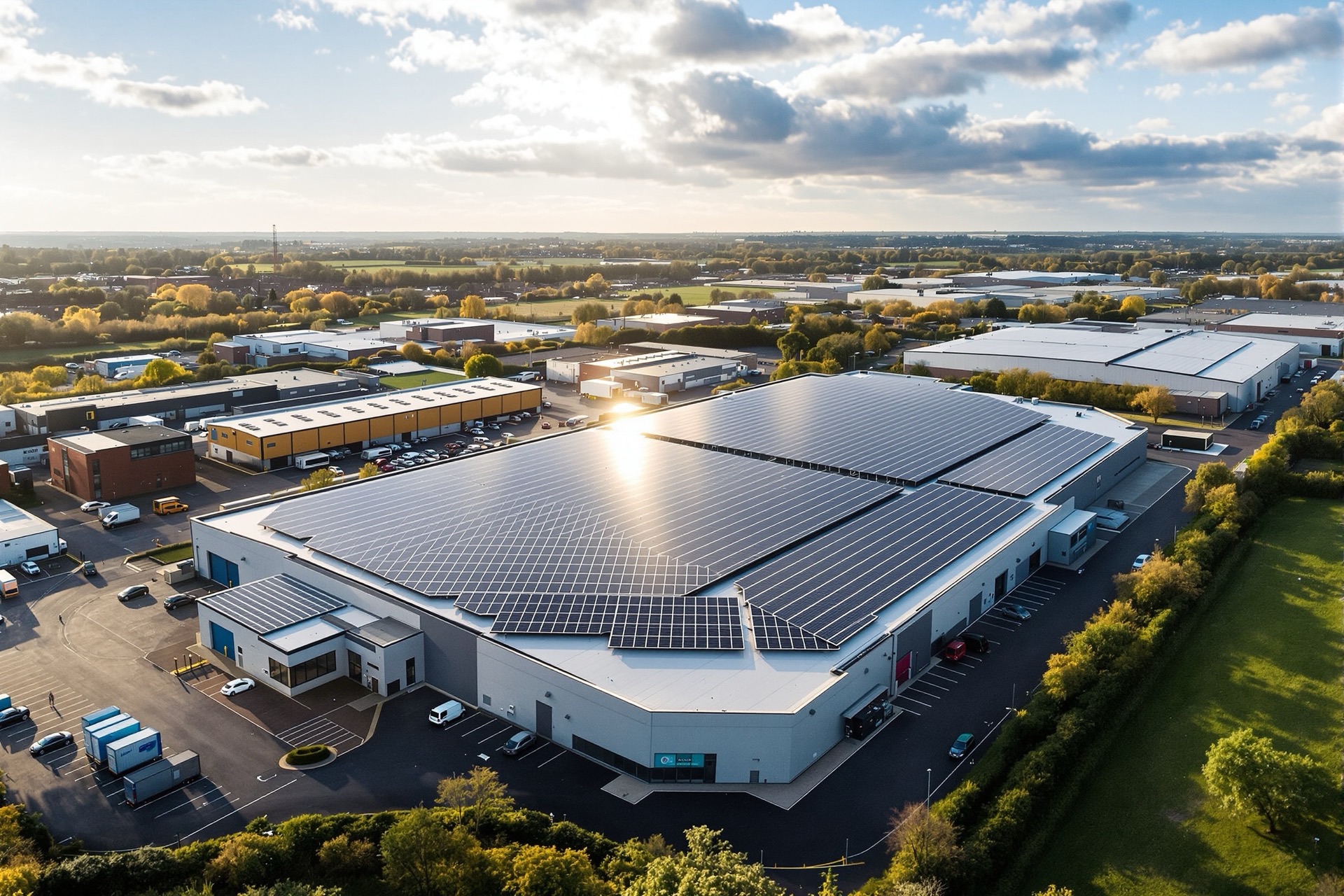
Your roof’s shape changes everything for commercial solar planning permission. It’s not just how it looks. The rules handle flat roofs and pitched roofs very differently. Mess this up, your whole project could just stop.
On pitched roofs, panels must sit perfectly flat with the roof. They can’t stick out more than 200mm from that roof line. That’s a hard limit. Go over it, and you lose your permitted development rights. You’ll need a full planning application then, for sure.
Flat Roof Rules Are Tighter
Flat roofs face more questions. Panels on a commercial flat roof can’t be more than one metre higher than the roof’s top point. Sounds like plenty of room, right? But add in the mounting frame and the tilt to get good sunlight, and it closes in quickly. We see this trip up owners constantly on warehouses in Trafford Park or the industrial spots near Oldham Road.
And here’s what nearly everyone misses. On a flat roof, panels also can’t be seen from a public road, if the building’s in a conservation area. Even outside those areas, the height rule still stands. So, the angle you mount them? That truly counts.
Why Manchester’s Building Stock Makes This Relevant
Manchester’s commercial roofs are a real mixed bag. Old Victorian buildings in the Northern Quarter often have steep pitched roofs, slate tiles and all. New office blocks in Spinningfields mostly sport flat roofs with membrane covers. Retail parks near Gorton and Openshaw? They’re often somewhere in the middle, with shallower pitches that could swing either way for planning.
Each roof needs its own plan. A steep pitch lets panels sit close to the roof easily. A shallow pitch might need frames angled just right, pushing that 200mm limit. Flat roofs? You need to measure the total height, mounting system included, very carefully.
The roof type also hits structural loading. Older pitched roofs here in Manchester just weren’t made for extra weight. A structural survey before we install? It’s not just a suggestion, it’s absolutely. We’ve had to walk from jobs where the roof simply couldn’t hold panels safely without expensive reinforcement first.
The Planning Trap With Mixed Use Buildings
Some commercial spots in Manchester are actually mixed-use buildings. Think ground-floor shops with offices up top, or workshops with a flat above them. If any bit of the building is a home, the commercial permitted development rules don’t quite fit. You might need planning permission, even if the roof type usually would let you bypass it.
This catches out more business owners than you’d imagine. A building appearing purely commercial might have a hidden residential part in its title deeds. Always check, don’t just assume you’re okay.
The real point here is simple. Know your roof type, measure panel projection dead-on, and check the building’s use class. Do all that before you commit to anything. Unsure if your Manchester property qualifies for permitted development? Our commercial solar panel crew can look at the details and sort the planning for you.
One more detail worth knowing, if your building has multiple roof sections, different heights or angles, each part gets looked at on its own. A flat roof extension behind a pitched-roof building? It doesn’t just get the same permitted development allowance. They’re separate surfaces, according to the Planning Act and its orders.
Frequently Asked Questions
Do conservation areas in Manchester always mean you need planning permission for commercial solar?
Not always, but they make it much more likely. If your commercial building sits inside a conservation area like Castlefield, Ancoats, or near St Ann’s Square, permitted development rights are restricted. You’ll usually need prior approval or a full planning application instead. We’ve seen businesses near Deansgate surprised to find their building just inside a conservation boundary. Always check your property’s status with Manchester City Council before you order anything.
What’s the difference between prior approval and full planning permission for commercial solar in Manchester?
Prior approval is a lighter process. You notify Manchester City Council, and they have 56 days to respond. They only look at things like appearance and glare. Full planning permission takes longer — usually 8 to 13 weeks — and needs detailed plans. Prior approval suits mid-range jobs, like wall-mounted panels visible from a road. Full planning is for listed buildings or large ground-mounted arrays. Knowing which route applies to you saves weeks of waiting.
Can a large warehouse in Trafford Park install ground-mounted solar panels without planning permission?
Only if the array stays under 9 square metres and it’s the only standalone installation on the property. Trafford Park has plenty of open commercial land, but bigger ground-mounted systems almost always need a full planning application. Many warehouse owners assume open land means no restrictions. It doesn’t. Rooftop panels are far easier to get through permitted development. If you’re planning a ground array, check the rules early — it changes your whole project timeline.
Is a common mistake businesses make assuming permitted development always covers their solar installation?
Yes, and it’s one of the most costly errors we see. Permitted development rights have specific conditions — panels can’t project more than 200mm from the roof surface, and they can’t sit above the roof’s highest point. Miss one condition and the whole installation is unauthorised. That can lead to an enforcement notice. Listed buildings and conservation areas are also excluded entirely. Never assume you’re covered. A quick check before you start saves a lot of trouble later.
When should a Manchester business owner call a professional instead of self-assessing their planning status?
Call a professional before you sign any contracts. Self-assessment works for simple, straightforward rooftop jobs on modern commercial buildings outside conservation areas. But if your property is listed, sits near a heritage boundary, or you’re planning a ground-mounted system, get expert eyes on it first. Retrospective planning applications are expensive and stressful. Our parent page on commercial solar panels in Manchester covers how to get your permitted development status confirmed before any work begins.
Does the age or type of commercial building in Manchester affect planning permission requirements for solar?
Absolutely. Older buildings in Manchester are more likely to be listed or sit inside conservation areas. A Victorian mill in Ancoats and a modern office block in Salford Quays face very different rules. Listed buildings almost always need full planning permission, regardless of panel size. Newer commercial buildings outside protected zones usually qualify for permitted development. The building type also affects how panels can be fixed, which can push a job out of permitted development conditions entirely.
Plan Your Next Solar Project
Put what you have read into practice. Request a free site survey and receive a detailed, itemised quotation for your commercial solar project.
Request A Free Quote